
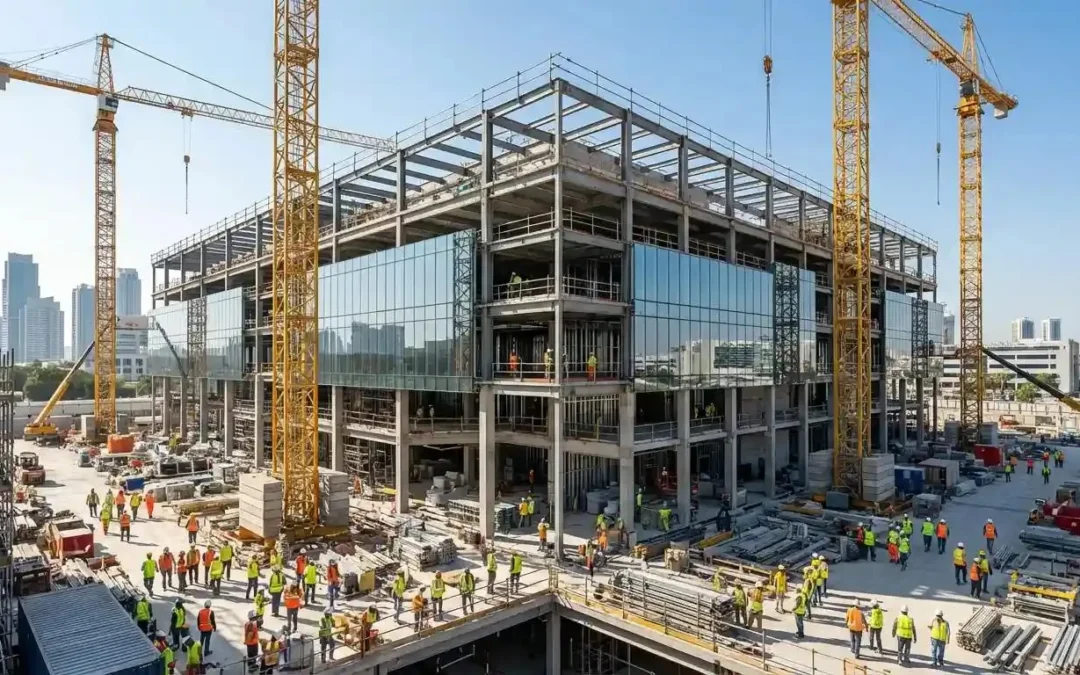
Every building needs a strong and reliable structural foundation. Whether it is a residential home, commercial office, or large-scale property development, structural engineering plays a critical role in ensuring safety, stability, and long-term performance.
Structural engineers are responsible for analysing, designing, and evaluating the structural systems that support buildings and other infrastructure.
At 123 Property, structural engineering forms an important part of our integrated property development approach, helping clients achieve practical, reliable, and efficient construction outcomes.
What Is Structural Engineering?
Structural engineering is a specialised field of civil engineering focused on the strength, stability, and performance of structures.
Structural engineers evaluate how buildings respond to different loads, including the weight of construction materials, occupants, furniture, wind, and other environmental forces.
Their work involves selecting suitable structural systems, designing building components, and ensuring that designs meet applicable engineering requirements.
A properly engineered structure provides the foundation for a safe and durable building.
Why Structural Engineering Matters in Construction
Structural engineering is essential because the safety and performance of a building depend on its ability to withstand anticipated loads and environmental conditions.
Engineers assess the forces acting on a structure and develop solutions that distribute those forces effectively.
This process helps reduce the risk of structural failures, excessive movement, and other performance issues.
Professional engineering also supports compliance with the National Construction Code and applicable Australian Standards.
Foundation Design and Structural Stability
Foundations transfer the weight of a building to the ground beneath it.
The appropriate foundation system depends on several factors, including soil conditions, building size, structural loads, and site characteristics.
Structural engineers may work with geotechnical professionals to determine suitable foundation solutions.
A carefully designed foundation can help minimise issues such as excessive settlement, cracking, and uneven structural movement.
Choosing Appropriate Construction Materials
Material selection is another important responsibility in structural engineering.
Common structural materials include reinforced concrete, structural steel, timber, and masonry.
Each material has different characteristics relating to strength, durability, weight, construction requirements, and cost.
Engineers evaluate these factors when recommending suitable materials for a particular development.
The right combination of materials and structural systems can improve construction efficiency while supporting long-term building performance.
Supporting Sustainable Construction
Sustainability is increasingly influencing structural design and construction practices.
Structural engineers can contribute to sustainable outcomes by improving material efficiency, reducing unnecessary structural weight, and considering durable construction solutions.
Optimising structural systems may reduce material consumption without compromising required performance.
Collaboration between structural engineers and architects also helps integrate sustainable design principles into the overall development.
How Structural Engineers Work With Architects
Architects and structural engineers perform different but closely connected roles during property development.
Architects focus on spatial planning, functionality, aesthetics, and the overall building design.
Structural engineers develop the supporting structural solutions needed to make that design technically achievable.
Early collaboration helps identify structural constraints, coordinate design requirements, and minimise changes during construction.
This partnership is particularly important for complex buildings, large open spaces, and projects involving significant structural alterations.
Structural Engineering for Residential and Commercial Projects
Structural engineering requirements vary depending on the type and scale of development.
Residential projects may involve foundation design, load-bearing walls, floor structures, roof framing, and extensions.
Commercial projects may require more complex structural systems to accommodate larger floor areas, equipment loads, and operational requirements.
Experienced structural engineering professionals evaluate each project’s specific needs and develop appropriate design solutions.
Why Choose 123 Property?
123 Property provides access to multidisciplinary expertise across architecture, town planning, structural engineering, construction, and project management.
Our coordinated approach supports communication between development professionals and helps clients address important structural considerations throughout their projects.
From initial planning to construction coordination, we focus on delivering reliable solutions that balance safety, functionality, and design requirements.
Conclusion
Structural engineering is fundamental to safe and successful construction.
Through careful analysis, appropriate material selection, and collaboration with other development professionals, structural engineers help create buildings designed for long-term stability and performance.
Planning a residential or commercial construction project? Contact 123 Property to discuss your structural engineering requirements.